Tuesday, February 23, 2010

Passion for Passion Fruit


While in Florida this past weekend I went to the most incredible fruit stand I could ever imagine. I'd tell you where it is if I wasn't also trying to write an article about it; wouldn't want to scoop myself.

However I would like to scoop some more goop out of a fresh passion fruit like the one I bought there. The twang of passion fruit is remarkable in nearly any form, even in those dubious tropical fruit cocktails that probably don't contain any actual passion fruit (or any fruit).

Jean-George's trademark passion fruit souffle is the star of the dessert menu at Market (though not made with the "seasonal market ingredients" the restaurant promises, though there are varieties of p.f. native to the U.S.). You can even purchase a passable passion fruit at some higher end supermarkets. I'm not going to name names, so I'll just call such a place "Foal Hoods."

But the passion fruit from my mysterious fruit stand blew away all other incarnations. I've said it before and I'll say it again: the ultimate ingredient based cooking is just eating the ultimate ingredient. Raw, with no prep and with your hands.

You wait until the skin is a little crinkly. You pick up the fruit, wondering how someting so light could taste so crazy. You slice it open with your mom's challah knife whose handle you unsuccessfully tried to refinish in middle school. You show the spread-eagled fruit to your wife, who recoils a little at the sight of the pulp, which admittedly does look like a cross between frog's eggs and a sinus infection (though she does take a taste).

You spoon the innards into your mouth. Your eyes widen. Your hips start to waggle. Your passion is stirred, making this the most aptly named piece of produce. Besides the orange.

The flavor is sour enough to feel it in the A-1 spots. Unlike a guava, a passion fruit's seeds are not an imposition and instead offer a delightful crunch not unlike the puffed rice in a Krackel. The taste is more tart than sweet and is as bracing as a cup of coffee while delivering a heavy dose of that funky tropical flavor that I am simply not creative enough to describe.

A fresh passion fruit tastes like.... well, a fresh passion fruit.

Stumble Upon Toolbar

Wednesday, February 17, 2010

Shanghai Gate


For most of my life I was content -- happy, even -- to slurp down the thick, sugary sauces of American Chinese food. Was it authentic? Uh-uh. Was it more exciting than American American food? Uh-huh.

Then I discovered Sichuan cuisine and everything changed. The tongue numbing and transit time-speeding sensations of Sichuan peppercorns paired with chilis was a world of flavor I couldn't have imagined while still eating at places with names like Happy Garden (you'll know the worst of them by the overexposed photos of dishes hanging over the counter).

But then I realized that Sichuan Chinese food was perhaps only better than American Chinese food because it was true to region and therefore less corrupted by those diabetes-inducing creations like Orange Chicken that more resemble a deep fried Twinkie than whatever they started as.


Enter Shanghai Gate. Gone are the fireworks of Sichuan cooking but with no compromise in flavor, texture, or options for eating offal (above: pig kidney with ginger and scallion). Instead you'll find subtle flavors as humble as the modestly atired women depicted in the restaurant's logo.

At (through?) the Gate you can sample dishes you may have read about in Fuschia Dunlop's excellent books on Chinese eating. Dishes like Lion's Head Casserole: a slow cooked, sweet and anise-heavy ball of beef and rice, tender enough to eat with one of those shovel-tipped straws that come with Slurpees.

The Globe once wrote that "What you get at Shanghai Gate plain and simple is a chef who really knows how to cook." Luckily, you also get that chef's food. And you get to eat it.

Stumble Upon Toolbar

Tuesday, February 16, 2010

Tea and Food Party

I would just like to make it perfectly clear that Tea and Food is in no way affiliated with the Tea Party movement.

Tea and Food believes in bettering our society by rejuvenating our relationship with food and not by siding with militia groups and global warming deniers to resist the government. When Tea and Food feels down about our government, it remembers that delightful little organic garden on the White House lawn.

Perhaps the only thing that T&F and TP have in common is dried beans: I've been meaning to eat more of the heirloom Jacob's Cattle beans I received in my winter CSA, and Tea Partygoers have been meaning to stock up on cans of pintos to survive the coming Civil War that they wish to incite yet feel they have no choice in avoiding.

Again, Tea and Food has nothing to do with the Tea Party movement. I support local agriculture because it enhances communities and because small scale farms produce more flavorful fruits and vegetables, and not because I think the Federal Reserve was created to control my mind and that I need to grow my own corn in order to survive the oncoming clash.

If, however, anyone out there would like to start a rabid grassroots initiative called the Tea and Food Party Movement, I won't stop you. In fact, I'll bring the whole grain cookies.

Stumble Upon Toolbar

Thursday, February 11, 2010

An Elegant, Vegan Dessert


This is a somewhat elaborate dessert recipe, but a good one nonetheless. And if you use dark chocolate, it's vegan.

Recipe: Raw Ginger and Dark Chocolate Sandwich

Ingredients:

2 small squares of dark, fairly traded, organic, communist chocolate
1 thick slice of raw ginger root, peel on

1. Carefully snap the pieces of chocolate from the bar. Snap another and eat that one too.

2. Slice off a thick slab of raw ginger root. Stick your nose in the freshly cut root and deeply inhale.

3. Place the ginger between the slices of chocolate, pinching between your fingers to keep in place.

4. Garnish with nothing, serve by putting in your mouth.

Stumble Upon Toolbar

Tuesday, February 9, 2010

My Latest

Pick up a copy of tomorrow's Boston Globe for my latest article, or if you personally want to be responsible for the death of old media, click here:

http://www.boston.com/lifestyle/food/articles/2010/02/10/danvers_start_up_coaches_clients_on_making_healthier_choices/

Stumble Upon Toolbar

"A" Perfect Meal


For those of you who read Anthony Bourdain's book on the perfect meal, you'll recall the cop-out ending in which he declares that there is no such thing as the perfect meal.

Neither the Bedouin-roasted lamb testicle nor the still-beating heart of a cobra took the title, and in the end I think he said that the ribs he was eating while writing the epilogue were just as good as anything else he'd had because of the context (a beach in the Caribbean, with his wife).

As Bittman (and probably many other people) says, perfection is often the enemy of good enough. So while "the" perfect meal may not exist, I realize that very often I eat "a" perfect meal. Last night's dinner, which is today's lunch as I type, was one such repast. (Note: I want credit as the first person in the history of the English language to use the word "repast" without also saying "sumptuous.")

Elise and I reconstructed a cauliflower soup we had at Chez Panisse, baked cornbread and perfectly blanched and shocked some kale. That's it.

"The" perfect meal? Well it's no lamb's testicle, but certainly "a" perfect meal. It was delicious, it adhered to my food ethics, and we weren't struck by lightning while eating it. Let's not forget to be thankful for the little things.

We've been making black pepper flecked cauliflower purees since before our pilgrimage to Chez Panisse, but it wasn't until after our meal there that we hijacked their swirl of (what I hope really is) truffle oil. The cornbread was made with cornmeal from Pete's Greens, neglected since the summer but still perfectly good, and the kale was as good as kale gets: kale cooked even one moment too long, unless in that awesome Portugese soup with sausage and potatoes, is grey, squishy, pathetic, and the kind of thing that vegetarians deserve to be made fun of for.

There was no meat, but there were ghosts of animals. Chicken stock in the soup, bacon grease in the cornbread pan (which made for a crackly, brown crust), butter on the bread. To someone who doesn't eat meat, these might seem like unnecessary corruptions. To someone who does, they're a beautiful compromise.

Stumble Upon Toolbar

Saturday, February 6, 2010

Quote of the Day

"They're happy because they eat butter!"

From the Weston A. Price Foundation's website.

Stumble Upon Toolbar

Thursday, February 4, 2010

Is Kosher Greener?

Thanks to Jay for sending me this article from Slate. It's an interesting read for anyone like me who has wondered if the ancient foods laws of kashrut and halal match up with the newer school (though many would argue that it's not new at all) of food purity: sustainability.

So is kosher meat better for the environment than the non-kosher alternative at the supermarket? According to this article, no.

Essentially a kosher animal is one that is raised exactly the same as a non-kosher animal (in a feedlot, on antibiotics, without massages) until the moment it is killed. While a kosher animal may be killed more humanely (an overlap with sustainability), by that point the environmental damage has already been done. Kosher meat may technically fit the criteria followed by observant Jews, but it does little more for the animal, the planet, or the eater. If you want to eat kosher and eat green, you need to look for eco-kosher certification.

As I've said before, if I have the choice between a sustainably raised pig and kosher, supermarket chicken, I take Michael Pollan's advice before the lord's. Kudos to those who are making it easier to do both.

What's really interesting to me is that if you were to raise animals the way Jews did in the ancient days, by default you would end up with eco-kosher. So really the enemy is modernity.

Stumble Upon Toolbar

Tuesday, February 2, 2010

Winter Shrimp Boil


While skating over (refrozen) ice fishing holes on Fort Pond last weekend, I was reminded of another way to keep it local in a New England winter: eating ice. Also, fishing.

Unlike crops, fish don't die in the winter, so we can kill them and eat them. Last night I had the chance to eat many, many marine creatures thanks to sometimes T&F contributors Dave and Karen.

They participate in the Cape Ann Fresh Catch seafood CSA (or "CSF") and receive alternating pick-ups of shrimp and fish, fishing conditions permitting. To make up for a missed share last week, yesterday they received a whole cod plus five pounds of shrimp, a pairing my friend Amanda called "surf n' surf."

You would not believe how much shrimp five pounds of shrimp is. At a restaurant, shrimp is stingily doled out by count: a skewer of four, one per summer roll. Last night the four of us ate as much shrimp as we possibly could, the shrimp was as delicious as imaginable, yet shrimp remained.

Even a rubbery, defrosted and then overcooked, farm raised Indonesian shrimp that's destroying the environment is still pretty tasty, but these were a different ball game altogether. I often bring up the backyard tomato anology and it applies perfectly here; everyone knows how much better a homegrown tomato is than its pale and mealy supermarket cousin, but not everyone realizes that everything is like that. Whether it's a leaf of sage from your herb pot or a shrimp hauled in that morning, fresh, local, real food is always as different from the alternative as those two tomatoes are from one another.

Every shrimp was like a little lobster. The flesh was as supple as cotton candy, the flavor sweet like the finest, freshest butter and not at all "fishy." Most were teaming with (what I hope was) roe, a delicacy within a delicacy. The heads were a pleasure to suck and contained a more concentrated dose of shrimpiness than rest of the body combined, besides a couple of bitter ones that must have been thinking dark thoughts when the net was hoisted. I'm glad they were stopped before they could act on their impulses, whatever those were (probably "let's eat some more sh*t!").

Dave being a Marylander, the shrimp was prepared a la boil and quickly steamed in a pot that contained shrimp stock (from a previous week's shells), white wine, a little heat, Stillman Farm sausage (another CSA), potatoes, and corn.

Of course fresh locally grown corn can't be found for a thousand miles in any direction, and the boil is generally a summer thing, but the novelty factor served as a bright light in these cold, dark days. It was a decidely unseasonable way to feast on an otherwise seasonally available ingredient: (too much) shrimp.

Now isn't that better than eating ice?

Stumble Upon Toolbar

Friday, January 29, 2010

Leeks + Stock = Soup


When I was an adolescent on a trip to Israel, I asked my rabbi for his opinion about the validity of other faiths. "There are many paths up the mountain," he added, sagely. "But we think ours is the fastest."

I feel the same way about making soup by simmering leeks in stock. There are many other wonderful ways to make soup, but this one most efficiently cuts to the essence of soup (and unlike religion, it doesn't require you to sometimes wear nice shoes). I could stop this post right there, but I continue.

A steamy bowl of leeks swimming like slim green eels in a cloudy broth of chicken stock is somehow strangely comforting. There's just something so soothing about a leek. Maybe it's their cool, blue-gray hue, or their steadfast, vertical growth pattern. Maybe it's that I primarily associate them with spring and fall, those gentler seasons in which they flourish.

For stock, I save my chicken bones for a couple of months in the freezer and then roast them. While those simmer in water for a few hours I add whatever aromatic veggie scraps I might have around. A limp carrot here, some sage stems there. Once I froze a somewhat deflated celeriac whole and when it was stock time (or stock o' clock), in it went. I love making stock: it ties up all those little loose ends.

I'd write up a recipe for this soup but there's really nothing to say besides this: slice leeks vertically into thin strips, wash them well, simmer until just tender in stock and add salt and pepper to taste.

It may not sound like much, but there's really something to it.

Stumble Upon Toolbar

Wednesday, January 27, 2010

Appearance v. Reality


As you can see, my dog Oli loves the woods behind our house. But a few months back he chased a cat into those same woods only to return with blood spurting from his paw. It turned out that he had cut an artery, and I'm grateful that we live so close to the vet as a thirty pound dog only has so much blood to lose.

At the vet, they put a tourniquet on his leg and knocked him out so that they could tie off the artery and stitch him up. When they removed the sutures a few weeks later, the wound re-opened and we had to return to have it stapled shut. As you can imagine, none of this was much fun for me, my dog or the vet, despite the vast sums of money they earned in the process.

The cut appeared to have been caused by a piece of broken glass. Oli and I traipse through those woods almost every day, and since he was only injured once, I decided it was a fluke. We now stay away from the vicinity of where he was hurt, and I thought that meant we'd be safe. Until yesterday, when virtually the same thing happened in an entirely different part of the woods. He didn't get the artery this time, but it was a terrible cut nonetheless and certainly worse than any I've ever had. If you don't believe me, there are plenty of bloody paw prints still in the snow.


There was another rush to the vet, and now he's lying beside me with a bright blue splint on his left hind leg. As my friend and fellow cook Chris said, "If he's going to be running up bills like that, he'd better get himself a job."

If you're wondering why I'm writing about this on a food (and tea) blog, here's the tie-in. Whoever threw that bottle into the woods may have thought that their action had no recourse, but years later it would cause great suffering and financial loss. Hmm, what other aspect of our lives does that sound like? How about.... food! Our effect on the world based on the kind of food we eat is just as direct a relationship as bottle-tosser to pup.


The woods behind my house are gorgeous, but if you look hard enough you'll find that they're in fact full of broken glass and rusty metal from years of irresponsible dumping. Same with that gorgeous steak on your dinner plate. It might appear perfect in every way, with a rich marbling, juicy pink center and salty crust. But unless that steak was sustainably raised (pastured, local, humanely slaughtered, etc.), you have to learn to associate it with the pesticide, synthetic fertilizer, petroleum, antibiotics, and cruelty that went into it. Even if it looks fine.

Do the woods in the photo above look dangerous? Perhaps a little foreboding in a Hansel and Gretel kind of way, but dangerous, no. Yet they are, as is that steak (or tofu, for that matter, depending on how and where it was created). Instead of not seeing the forest for the trees, I've been not seeing the broken glass for the forest. But we're not going back there anymore, unless I get Oli some Muttlucks.

Just like Oli's accidents, that beautiful looking, planet destroying steak is another reminder of the lesson our high school English teachers tried so hard to drill into our Stone Temple Pilots-addled brains: appearance versus reality.

Stumble Upon Toolbar

Friday, January 22, 2010

Nostalgia-Inducing Sesame Street Food Videos


Do you remember those Sesame Street videos that revealed the origins of common items like crayons or peanut butter? I do. They were seared into my brain by repeat viewings during formative years.

Of course now they're easy to revisit thanks to youtube, and I've made it one step easier by including a couple in this post. These two were some of my favorites, probably because they focused on food. Inspired by the one about making cheese, my sister and I used to swirl the water in the swimming pool pretending it was separating into curds and whey.


The funny thing about these videos (besides how all of the cheese makers have huge beards and how the narrator is that 80's kind of androgynous) is that they show where food comes from, but in both cases the answer is "a factory."

Stumble Upon Toolbar

Monday, January 18, 2010

Meals from Meals


A recent lunch consisted of black sushi rice with avocado and pickled ginger, a hunk of raw cabbage with lemon juice and a sprinkling of salt, shredded, poached chicken with Sichuan peppercorn, and just a touch of goat stew. In case you can't tell, all leftovers.

That's often how lunch goes when I'm working from home. Though I'd rather slave over a hot stove than a slightly warm laptop, I have a rule against doing any real cooking during the work day and so lunch is usually a melange of remnants of previous meals. While I wouldn't have made the above menu as a first run, I enjoyed it nonetheless. These comestible synecdoches always bring back fond memories of the larger meals they represent.

The rice reminded me of dinner a few nights back, when we attempted to make sushi before realizing we didn't have any nori. Raw cabbage always brings to mind another strange lunch: Michael Ruhlman's cabbage and peanut butter sandwich. The shredded chicken brought back memories of poaching my last bird. We both simmered at the same time, I in the bathtub and it in an anise and ginger broth. The stew was made with goat from Codman Farm and root veggies from our winter CSA, proof that you can go local year round.

I enjoy these kaleidescopic lunches. I'm sure there are people that throw away most of their leftovers, and I certainly have to relegate some stuff to dog or compost, but a well managed rotation of meal remainders can itself give birth to other, equally satisfying if less coherent dining experiences.

Lunch is rarely as relaxed or as elaborate as dinner, but eating something the next day allows me to relive the magic of the night before, when I was drinking wine with my wife and not thinking about work. Kind of like those bittersweet moments when you recall vacations by seeing far off purchases on a bank statement weeks later.

And if leftovers sounds too blah, call it small plates.

Stumble Upon Toolbar

Quote of the Day

"Best to try this healthy, vegetable-packed cake today before your mouth blisters into a cyst-riddled pus hole. "

From the very strange and very enjoyable blog Apocalypse Cakes.

Stumble Upon Toolbar

Friday, January 15, 2010

Photo of the Day: Adult Cupcake


Aka defrosting chicken jus. (Ironic that one would defrost a cupcake.)

Stumble Upon Toolbar

Thursday, January 14, 2010

Chateau de la Chesnaie Muscadet Sevre et Maine Sur Lie, 2008


Ever since reading Asimov's post on chablis, I've been hankerin' for dry, mineral heavy whites. Assuming one can in fact "hanker" for fine wine.

Wine consumes a relatively small proportion of my food consciousness compared to gourmands of ages past. With food lovers of my generation (I'm avoiding having to say "foodie" -- shudder), wine is much less cool than Belgian beer or artisanal hard cider. However, wines such as Chablis and the Muscadet pictured above have excited me more than any others. Ever. I want them all the time.

Perhaps that's because this kind of wine -- dry, chalky, citric -- was previously so unfamiliar to me. Who ever took a sip from their parent's glass and tasted limestone? ( My all time favorite wine guy, Chris at West Concord Liquors, described the taste of a particular rosé as being like sucking on a lime - mmm!) I just wasn't ever exposed to anything like this.

I've had plenty of Merlots and Cabernet Sauvignons that have been equally good at being Merlots and Cabernet Sauvignons as the whites that I've been drinking, but they could never be as interesting. A good peanut just isn't as good as good olive.


I know what you're thinking: "I should check my e-mail." But here's what would be a convenient thing for you think at this point in the post: "Sure these wines sound great, but what about the price?" Well I'm glad you asked.

Notice the above photo. See the cute little chateau, the confusing array of French words (which is the vineyard, which is the region, which is the year?). Now notice the price tag. That bottle costs thirteen bucks and is as good as anyone needs wine to be, yet it's about a Brazilian times better than so many other boring bottles you're apt to get for the same price. And it was way better than Avatar, which set me back about the same amount.

I've been told (by people and by the backs of bottles) that Muscadet is "the" wine to drink with oysters, but the hype didn't prepare me for just how symbiotic the paring would be. The highly mineral wine already has notes that taste like oysters, or oyster shells to be more precise, plus citrus. Kind of like an alcoholic oyster with a squeeze of lemon. The oyster of course brings zinc and salty sea breeze. My mouth puckers and waters just thinking about it. Why did steak and lobster get to be called "surf and turf?"

This wine also wins the "most improved by swirling" award. I was absentmindedly rolling my wrist with glass in hand while thinking about something else in the same way I might play with a paperclip, but when I tasted the wine again it had undergone a complete transformation. (Paperclips taste the same no matter how much you play with them.)

After a few laps around the glass, the slight effervessence was gone but all of the sharpness and flavor remained. It was as though the wine had slipped off its glove and I could now feel the warmth of its hand. (I was going to write something much, much dirtier.)

Stumble Upon Toolbar

Wednesday, January 13, 2010

Additional Thoughts

First, back to the subject of micronutrients. In thinking more about Kristof's piece in the Times, I realize that the foods he lists which contain micronutrients ("salt, sugar, flour or cooking oil") are all processed.

But surely micronutrients occur naturally, otherwise the human race would never had made it to modernity. I'm sure that infusing flour with folic acid is the shortest and most immediate step to upping the micronutrient intake for nutrionally deprived populations, but then what?

Here in the U.S. we're suffering the long term effects of what is now referred to (negatively) as the Western Diet: diabetes from sugar, hypertension from salt, and every bad thing you can imagine being linked to white flour. I know that any food is better than no food and that processed foods are the quickest fix to famine, but the last thing we want to do is to forever hook other populations on the stuff that is now doing us in.

My guess is that micronutrients naturally occur in the foods that everyone ate prior to industrialization, and in a perfect world we would enable populations to get back to eating their traditional diets, which nearly always consist of more real food such as fruits and veggies, rather than mixing vitamins in with their sugar.

Now to return to yesterday's post and my vision for a more sustainable winter food supply for New England. I left off a key component of eating locally grown produce in winter: extending the season. Greenhouses, hoophouses, cold frames and so forth. There are farms that harvest spinach in the winter in Maine. The technology is cheap, the environmental impact is far lesser, and the source is more reliable. What are we wating for?

Stumble Upon Toolbar

A Taste of the Suburbs

See here for my article in today's Globe about my new neighbor, a Pakistani exchange student who loves to share his own national cuisine and to eat ours. Of course his favorite Pakistani dishes are curries and his favorite American food is "junk."

Stumble Upon Toolbar

Tuesday, January 12, 2010

Florida, Frost, Food and Pythons


The above photo was not taken in my home state of Florida, but it nearly could have been (it was snapped on Sunday during a snowshoe through the Sudbury Desert). As you've probably heard, temperatures in FL have plummeted to record lows, wreaking havoc on a state better known for being too hot all of the time.

Here in New England we're used to such temperatures, but we're also used to getting a lot of our food from Florida. This fact was driven home for me yesterday I swung by my neighborhood natural foods market. The produce shelves were nearly bare save for a note explaining that below freezing temperatures throughout the South were to blame.

Oh, right! I forgot that bananas, tomatoes and all of the other tropical flora we're used to devouring day in day out actually come from very far away, and that many have pointed out the tenuous nature of depending on such distant places for our food supply.

It's been said that, when it comes to food, the country can survive without the city but the city can't survive without the country, and now it seems that cold places can't survive without the (supposed to be) warm places. Of course the delicious irony is that the less sustainable our food supply, the more chaotic the weather is going to get and the more we'll see the system flounder. In other words, the more we ship produce from far away, the more carbon we pump into the atmosphere, the weirder the weather gets, and the more wrenches will get thrown into the plan.

What does a more sustainable New England food supply look like in winter? On a grassroots level, it means home cooks doing more freezing, canning, drying and storing locally grown produce that keeps well. For instance, the $200 worth of root veggies and apples my wife and I have chilling in our hallway. But what does it mean for people who aren't hippy hobbits?

On a larger scale, we need more local processing of local ingredients. That way those of us who don't have time to cook and jar applesauce (though in my utopia that's something we all make time for) can go buy locally grown, frozen, dried and stored stuff at your neighborhood market. As Grist reports, to truly go local, we need not more independently owned groceries.

The one good thing about a freezing Florida is that it may help inhibit the horrifying Burmese python problem. When they get cold, these exotic invasive monsters come out to bask in the sun, and the Florida Fish and Wildlife Conservation Coalition is reminding hunters that it's a good time to find one and blow it away. And that opens up a whole new food supply.

Stumble Upon Toolbar

Thursday, January 7, 2010

A (Delicious) Ghost from the Past


I recently received a slim box in the mail with the surname "Gannon" written on the return address. I knew that could mean only one thing: I was going to eat some of the best chocolate in the world.

For those who don't know, Brendan Gannon ran the artisanal chocolatier known as La Tene out of Cambridge, MA. He had sent me a precious box of his spectacular creations as a combined wedding present/holiday gift, and I was thrilled to savor his stuff once again. There was only one catch... Brendan Gannon had been dead for years.

Well Brendan hadn't, but La Tene had. In a turn of events that still breaks my heart (or at least my taste buds), Brendan closed the doors to La Tene a couple of years back for no particularly shocking reason except that it can be really, really hard to run a small business. At the same time I was burying my own creative enterprise, the sketch comedy group my friends and I had started in college and that kept us touring around the U.S. for years afterward.

I was ready to let the comedy group go, but I was not ready to say goodbye to La Tene, and I told Brendan as much in no uncertain terms. His chocolates are simply the best. From the vegan peanut butter cups to the triple creme truffles (or the Sichuan peppercorn truffles, or the Guinness truffles...), this was a man who knew what he was doing. And what he was doing was making great chocolate.

I relished each and every one of my phantom La Tene chocolates as though enjoying one more night with a lost love. Actually, you can just change the "as though" in that last sentence to a comma.

I'm guessing that the box I received was part of a limited run that BG did for the holidays, because as far as I know it is simply no longer possible to experience La Tene. But if you really, really want to, I suppose you could beg Brendan or offer up vasts sums of money here.

But maybe that would be asking the beautiful and mysterious woman to take off her scarf.

Stumble Upon Toolbar

Wednesday, January 6, 2010

Fruit Loophole

The 36th rule in Michael Pollan's new book Food Rules is "Don't eat breakfast cereals that change the color of the milk."

But what if my breakfast cereal is loaded with turmeric?


Stumble Upon Toolbar

Circle of Life (and Compost)


Shortly before New Year's my compost bin reached capacity. Since I've never lived in any one place long enough to fill an entire Earth Machine, I wasn't exactly sure what to do.

My short term solution was this: empty the bin and cover the compost with a tarp until Spring. Would that be enough to keep out the foxes, raccoons and teenagers who hang out in the woods behind our house? Only time will tell.

Most of the compost was frozen solid, but the oldest stuff had stayed loose due to heat released by what Wikipedia so poetically calls "the microbial oxidation of carbon." As far as I'm concerned it was that or magic, since I have no way of proving either. But as a result I was left with the doughnut shaped ring of frozen compost pictured at top. What better embodiment of the notion of "closing the loop?"

A doughnut made out of decaying vegetable scraps and eggshells might not appeal to some, but I was intrigued. Here was a chance, on the eve of a new decade, to come face to face with the Ghost of Food Scraps Past. In an era when most of our garbage is whisked out of sight before we think twice about how much of it we produce or where on earth it goes, here was an opportunity to take a closer look at my personal consumption.

What I learned is that I eat a lot of eggs (the shells take a while to break down) and that things that say they're compostable, like potato starch forks or corn plastic bags, certainly don't seem to be.

In looking through the strata, I was able to recall some specific meals. There was a layer of corn cobs from a corn stock I made last winter, and the skin of a pumpkin that I'd peeled for a curry. When I had dug out the center but not yet lifted off the ring, the pile looked very much like a puehr cake.


And now that I think about it, there's plenty of puehr in there.

Absent from the compost pile was all of the junk that we couldn't turn back into dirt (besides the wine bottles I'm saving for another garden barrier, the egg cartons I keep forgetting to return to the farmer, and the bones that I bury in the woods). For instance, there were none of those eerily bandage-like spongy things that come under packaged meat.

Luckily, most waste can be composted or recycled and we don't produce very much trash. Or at least that's what I think. If there were a special cubby just for me at the garbage dump, and at the end of the year I could see all of the useless junk I sponsored, I'd probably be surprised.

But at least some of my waste will end up back in the garden, assuming those teenagers don't get to it first.

Stumble Upon Toolbar

Tuesday, January 5, 2010

The Dirt on Gluten

See here for Dr. Mark Hyman's piece in the Huff Po' on why the f*ck everyone is suddenly gluten intolerant.

Stumble Upon Toolbar

Micronutrients, Big Change

If you think microgreens are the hottest edible thing that begins with the prefix micro, think again. See here for an op-ed by Nicholas Kristof of the NYT regarding the amazing health benefits of micronutrients such as folic acid and iodine.

Kristof lays out one of those familiar scenarios in which it is very, very easy to do good. The basic gist of it is this: micronutrients are extremely important in early development and are cheap to provide yet are lacking in the diets of many residents of impoverished countries. The obvious question then is how to make micronutrients a bigger component of foreign aid.

Here's an idea. If American restaurant goers simply used the money they spend on the pricey but superfluous garnish known as microgreens to instead donate micronutrients to developing nations (according to Kristof, a year's supply costs less than a hamburger), there would be fewer babies born with holes in their heads, and would anyone really miss microgreens?

Seems like a fair trade to me. If anyone out there wants to start an organization called Micronutrients not Microgreens, you have my full support.

And while I appreciate Kristof's effort to raise awareness about this issue, I do find his lede somewhat misleading. Are folic acid and iodine really "scrumptious?"

Stumble Upon Toolbar

Wednesday, December 30, 2009

Rishi Ancient Emerald Lily


I've been in love with oolong for soo long that I can barely remember the last straight up green tea I've had. When I recently saw the attractive, slender whole leaves of Rishi's Ancient Emerald Lily displayed in a plastic baggie at my local natural foods shop, I decided to give it a go.

The Rishi website promises notes of pine nut and wildflowers. These I did not taste. I found the first brewing a little, for lack of a better word, seaweedy. It's a slightly unpleasant flavor I sometimes find in greens, and a personal reaction that can probably be traced back to my earliest associations with the stuff.

I first had green tea as a kid at the Japanese restaurants in my home town of Boca Raton where it was served along with miso and sushi. Those umami, oceanic flavors were so different from anything mom made at home, and when I drink green tea with a particular flavor profile today I can still summon up the befuddlement of my young palate.

Subsequent steepings proved more mild and less fishy with the nuttiness and grassiness that I associate with some of my favorite greens. The flavor was fine if unexciting, but what I really like about this tea is its organic and fair trade certification.

Sometimes, fair trade means a compromise in quality. Fair trade coffee and bananas are just as good as regular (or "evil") coffee and bananas, but they'll probably never be the THE best coffee and bananas. Of course human rights are vastly more important than complexity of flavor, which is why a pretty good fair trade trea becomes a very good tea in my book (or blog).

As I've discovered thanks to my new bowl, food and drink alone are not the sole components to pleasureable eating. Think about eating a Jean-Georges meal out of a tin can: it's just not the same, unless you're a goat. So in addition to lighting, tableware and presentation, we should all add ethics to our meal enhancing bag of tricks. This is one of the many reasons Chez Panisse remains so popular. After eating there, diners radiate a glow for more than one reason. There's the quality of the food and then there's the righteous feeling of knowing where it all came from.

I'm willing to give a so-so tea a great rating because of factors that have nothing to do with its flavor, and I'm not alone. Heck, I'm even happy to spend a little more cash to get this mediocre tasting but more ethically just product.

Restaurants, are you getting this?

Stumble Upon Toolbar

Monday, December 28, 2009

A Nauseatingly Decadent Christmas


This year I observed Christmas in the manner that I felt best befit my Jewish heritage: eating so much food that I felt sick.


On Christmas Eve there was tourtiere, a French Canadian meat pie that allowed Karen to embrace her culinary roots and me to eat three kinds of meat in one bite. As is the custom, the tourtiere was served with pickles, which help to cut the richness of the very once-a-year tasting pie.

Christmas day started with a cup of coquito, smoked white fish and Elise's challah (notice Oli's interest in it).


After doing the breakast dishes, we then made more breakfast. This time it was scrambled eggs with bacon and leeks, and of course by the time we'd finished it was time to start preparing dinner, a braised turkey stew.


Gripped by the festive spirit (and beer), I combined every delicious ingredient I could summon. I browned two turkey wings and one thigh along with onions, celeriac and carrots. In went several dried figs, some defrosted chicken of the woods from last autumn's bounty, dried shitakes in case defrosted chicken of the woods don't taste good (they do), a few Santa Barbara black olives, leeks leftover from breakfast, wild rice, which isn't really rice at all, fresh sage and parsley, a dash of pimenton, and an ample sprinkling of black pepper. Admittedly, there may have been fewer ingredients if I'd had fewer coquitos at breakfast #1.

Amanda brought some seriously marinated seared beef (in merlot and Sichuan peppercorns), and for dessert there were Karen's homemade truffles. Throughout the day I ate gingerbread ornaments off of the tree, without my hands. I also seem to remember eating some sausage, and probably putting some into the stew, too. There were copious amounts of Fingerlakes wine, Belgian beers, Belgian style beers, port, a small bottle of icewine that myseriously appeared, some Jameson with a lemon wedge, more coquito, and, in a nod to temperance, handfuls of mesclun mix eaten out of the bag. Oh, and some leftover goat gouda from our wedding. And at some point I ate three eclaires.

When I went to bed, I felt like I was body surfing on a wave of protein, sugar and alcohol. Sugar plum fairies would have danced in my head if all of the blood wasn't going to my stomach to fight the losing battle for digestion.

I went to sleep feeling as regal as the Nutcracker but woke up in the middle of the night feeling more like the eviscerated mouse king. Only instead of a sword, my stomach had been pierced by my own lack of self control around so much incredible food. Call it protein hara-kiri.

Cold, in pain, and alone in the darkest hours of the night, I swore that I'd never again eat and drink with such abandon. In the morning I woke up feeling fine and couldn't wait to do it again next year. Or maybe next week.

Stumble Upon Toolbar

Thursday, December 24, 2009

Market, Reviewed

Jean-George's new Boston restaurant Market was reviewed favorably in yesterday's Globe. You might recall my preview piece on Market from when JG was in town scoping out suppliers. That is all.

Stumble Upon Toolbar

Wednesday, December 23, 2009

On Avatar

Spoiler alert: I'm taking a break from posting about tea and food to discuss the film Avatar, and in doing so I'll be revealing certain key plot points. More important spoiler alert: Avatar is a terrible movie.

Before we come along, the planet Pandora is inhabited by tall, blue humanoids that look part African, part Native-American, have pointy teeth and can hiss like snakes.

As a Jew, I found the portrayal of my people in Inglourious Basterds to be rather flattering. If I were Masai or Sioux, I'm not sure I could say the same of the creatures in Avatar, who with their ear stretchers and monkey chant-like prayer ceremonies are clearly meant to represent the indigenous peoples of Earth, only hotter.

With air-brushed features and waspish waists, the Na'Vi look more like something from the pages of Cosmo than National Geographic. In creating a race of athletically superior, scantily clad supermodels, Cameron commits one of the biggest colonialist no-no's: sexualizing the natives.

In the director's defense, the Na'Vi have an elaborate social order, rich spiritual traditions and live in harmony with their planet and their god. Of course all of this, including learning to control flying dinosaurs with your hair, is mastered by the protagonist in three months.

Though the film champions indigenous rights, it's white people (in blue bodies) who get the best health care. When the Na'Vi tribe is decimated in an attack meant to evoke September 11th, instead of looking after their own, the entire clan gathers to appeal to their god to heal one white lady. And who unites all of the tribes to save the day? A white guy, on a red dinosaur.

Halfway through the film, at which point you'll already have to pee, I found myself wondering how Cameron could possible resolve a situation that, in the real world, has yet to be resolved: how to make peace between corporate interests and the livelihoods of indigenous peoples. The solution was fantastical flying reptiles, some guns, and the will of god. (forehead smack) Of course!

But my problems with Avatar extends beyond the portrayal of the Na'Vi. Despite the film's title, the actual theme of what it means to have an avatar was underdeveloped beyond the notion that if you don't have legs and your avatar does, you like it. The 1994 Aerosmith video for Amazing makes you wish you had an avatar more than Avatar does.

Also, what's the message for the thousands of adolescents who are flocking to see the film in crowds as thick as the trunk of the Hometree? That deep down, who you really are is your twitter account.

A word on the effects. Contrary to what you are clearly meant to think after being beat over the head with millions of dollars of technology, I didn't find the CGI drenched landscape realistic or even engaging. I found most of the effects shiny, cartoonish, and sort of... fruity.

The 161 minutes of eye candy make you feel the same way you'd feel after eating real candy for 161 minutes. After Halloween, all you want is a piece of lettuce and a glass of water. After Avatar, you crave real actors and good writing.

Also, who named the planet Pandora?

Stumble Upon Toolbar

Thursday, December 17, 2009

Leeks and Eggs (or Eggs and Leeks)


What, besides dirt that's impossible to remove, is there to not love about leeks? They're like onions without the bite, plus some spinach.

I've played around with leeks a lot and found that they're as versatile as they are funny to anthropomorphize. Though most chefs would say "discard" if you asked them to free associate a word with leek greens, I'm a big fan. You can blanch them and crisp them in hot oil as a garnish, you can chop them up and add them to a soup, or you can do my absolute favorite thing to do with either part of a leek. If you've read the title to this post, you know what that is.

A warm mound of leeks and eggs is the most comforting breakfast imaginable. Disagree? What, do you think French toast is? You're wrong: it's leeks and eggs.

Leeks and eggs are like peas in a pod, only better, because they're two things and because they're better than peas. They go together perfectly, and I could waste your time by describing exactly how and why, but instead you should just go make some.

-------------------------------------------------------------

Recipe: Scrambled Eggs and Leeks for Two (People)

Leeks (about half of a normal sized leek or five inches' worth or 3/4 cup chopped)
4 eggs
a pinch of salt
a pinch pepper
a pinch of your cheek, to know that you're not dreaming

1. Slice the desired amount of leek once down the middle and then chop into half circles, about the thickness of a Necco wafer.

2. In a deep bowl, pour cold water over the chopped leeks and thrash them around to remove the dirt. Once the dirt has settled, skim them from the surface and rinse again.

3. Warm a glug of olive oil or a pad of butter in a pan, enough to cook both the leeks and then the eggs. Add the leeks. Cook until tender but not crispy.

3. Add the whisked eggs, salt and pepper. Cook over low heat, stirring, to achieve a custardy, small curd scrambled egg. Serve with toast.

4. What else do you need to know?

Stumble Upon Toolbar

Wednesday, December 16, 2009

Quote of the Day

In today's The Pour, Eric Asimov writes the following:

"You might have to travel to Sauternes territory, southeast of Bordeaux, for a demonstration of how a good Sauternes can highlight and amplify the sweetness of, say, lobster."

Though I don't think you really have to go anywhere to get that lobster and Sauternes would be good.

Stumble Upon Toolbar

Self-Fulfillment Through Servingware


As I've said before, when it comes to food, I'm all about the food.

I'm much more concerned with the quality of what I'm actually eating (both gastronomically and ethically) than with the pedigree of the china it comes on or the knife it was cut with. That said, we've received some really nice wedding presents that have caused me to re-think my hard line on non-edible kitchen items.

Granted the gifts have remained within the spectrum of our preferences. Rather than a home sous-vide machine, we've received items such as a handmade Oaxacan table cloth and a lazy Susan made from a "retired" wine cask, but even these crunchier accoutrements have shown me the pleasures of atmospheric dining, and now that I've been there, I'm not sure I want to go back (to eating lunch directly from a hot skillet).

Salad just tastes better from the bowl pictured above. It turns ordinary dining into feeling like you're having dinner at a the hole of a very well-off hobbit. We're nursing the last greens we'll be getting from our winter CSA, and they deserve no less pomp than being nestled in the hollow of a handsomely carved walnut burl.

To return to the subject of knives, we also got a really, really good knife. I used to think that sharp was the only important feature of a knife, but I've now tasted Japanese steel, and I like it.

Watch out, bushels of root veggies in my hallway.

Stumble Upon Toolbar

Thursday, December 10, 2009

Flavor Imbalance


When cooking, one generally tries to achieve a balance of flavors. If your dish is salty but flat, you can splash in a little lemon juice for acidity, and so on.

But what about a dish with boldly unbalanced flavors? What about something that just screams one single ingredient? Like CHIIIIIIIIIIIIIIIIIICKEN!!!!!!!!

That's what happened when I made the soup pictured above.

I normally go for balance, but an off-balance dish can be much more interesting. Granted, this only applies to those who want their food to be "interesting."

Butternut squash puree is, by now, a no brainer. Even a stupid baby could make it. I've made it many times, sometimes with cream, sometimes with stock, sometimes with nothing more than water, and it's always easy and tasty. But since I rarely cook the same thing twice, I decided to mix it up this time.

No parsley garnish. No splash of cider vinegar. No trace of nutmeg. No roasted garlic. No sweated onion. Very little salt. I only added a small but dense amount of chicken jus replete with a thick layer of yellowish fat. It was not stock, which would have been delicious and well balanced. No, this was a one-note addition. And that note was chicken fat.

Though simple, and though it didn't contain anything remotely like, say, pomegranate seeds, shaved parmesan or a drizzle of truffle oil, all of which would have been lovely, it was a challenging bowl of soup. Rich to the point of disconcerting, chickeny to the point of overshadowing the typically dominant, sweet squash, it was unlike any butternut puree I'd ever had. Even the color was more poultry than plant.

If I'd had it at an otherwise unremarkable restaurant, I would have thought it was terrible. Why didn't they at least sprinkle on some black pepper? But if I had been served it at a great restaurant, I would have marveled at their audacity.

Stumble Upon Toolbar

Wednesday, December 9, 2009

Quote of the Day

From the fascinating NYT piece on the new and (not at all, really) affordable sous-vide machine for home cooks:

"English chef Heston Blumenthal, who once sous-vided a whole pig in a hot tub..."

I'm sure sous-vide cooking is extraordinary, but can you imagine anyone who buys one of these things feeling anything but regret about their purchase in 10 years?

An imagined conversation in 2019:

Wife: Honey, let's get rid of that creepy machine you bought that costs as much as it costs to feed many starving children.

Husband: But I was just going to make some perfectly poached eggs, even though, with talent, I could do so more or less for free.

Wife: All right. But I'm going to put it with the bread machine and salad shooter.

Stumble Upon Toolbar

Tuesday, December 8, 2009

Black Garlic


I'm not going to beat around the bush: black garlic is crazy, and you should try some.

I can't think of any other foodstuff that is at once so familiar and so confounding. When you taste a clove a black garlic, you know that you're eating garlic, yet the flavors have all been rearranged in new and different configurations. In terms of taste, black garlic is to garlic as ice-9 is to water.

For those who have no idea what I'm talking about, black garlic is non-black garlic that has been specially fermented and aged. Like most delicious things, it's long been used in Asia for medicinal purposes and is now being exploited in the West.

And with good reason. One word you'll often hear associated with b.g. is "fruity," and it's true. In comparison to boring old raw garlic (yuck!), the dark stuff is mellow, sweet, and... very difficult to describe.

When Amanda made an aoli with both roasted garlic and black garlic, the mysterious flavor only deepened, though walnuts were suddenly apparent. Black garlic reminds me of real balsamic vinegar without the tang and with.... again, hard to say.

I guess that, like Coke, black garlic tastes like black garlic.

Stumble Upon Toolbar

Wednesday, December 2, 2009

Poached Chicken


Now I love a roasted chicken as much as the next guy, assuming the next guy is Simon Hopkinson. In other words, I really love roast chicken. But if you're not going to eat the whole thing as soon as it comes out of the oven, with your bare hands, hunched over the skillet, dredging it in its own fat, roasting may not be the wisest use of a bird.

If you're cooking a chicken to eat all week, poaching provides a much moister option. Cold roasted chicken, by which I mean a roasted chicken that has been refrigerated and not some feat of molecular gastronomy, is quite delicious but seems so much tougher and drier than when you ate it hot. Yet poached chicken can stay downright silky when cool, even a few days after refrigeration.

In the past I've always boiled, but Fuchsia Dunlop has turned me on to the magical texture of the gentle poach. See the awesome Land of Plenty for the full technique, but the basic idea is that you boil water, add the chicken, bring back to a boil, simmer, then "plunge" the chicken into cold water to stop the cooking process. Here's mine in it's cooling bath/watery grave.


You think any chicken cooked in liquid is moist and tender, but you've never had it this good. Another bonus is that you're then left with the poaching liquid, which in my case also contained about a thumb's worth of a crushed ginger, a few pathetic old carrots that looked like a very tan witch's fingers, and a dried chili from Common Ground a few years back.

I drank the liquid in a bowl of noodles with a few paper thin (assuming the paper was cardstock) slices of raw kohlrabi. Doesn't that seem like something you can do?

Apart from the brutal murder of the chicken, it was a remarkably tranquil dish.

Stumble Upon Toolbar

Breaking News: Holiday Cocktails

See here for my latest piece in Stuff magazine (Boston) on holiday drinks to rival eggnog.

Though deep down, I do love eggnog. I suppose I even love it not deep down.

Stumble Upon Toolbar

Monday, November 30, 2009

Wedding, Honeymoon, Homecoming


Last week, I got married. It was incredible. Neither words nor 0's and 1's masquerading as words could describe it.

What I can describe is the food. The entire experience can be broken down into three distinct food phases: wedding, honeymoon, and homecoming.

At the wedding ceremony, we (barely) ate:

-mushroom, leek and ricotta salata strata
-turkey chorizo and black bean strata
-the best soup I've ever had (sweet potatoes, chicken stock, cumin, peanut...)
-roasted potatoes
-Iggy's rolls
-Iggy's croissants
-tons of incredible cheese
-arugula salad
-rivers of West County hard cider
-boatloads of roasted marshmallows
-bushels of sun crisps and merle rouge
-olive oil gingerbread with cranberry glaze, whiskey whipped cream and candied Buddha's hand (our wedding cake)

All of which was prepared by my good friend, the excellent chef Mrs. Amanda Jane Loring. If you want her to cater your event, and you do, drop me a line and I'll put you in touch.

For our honeymoon, my wife (!) and I then went to Portland, ME to do little besides eat. We consumed:

-french fries fried in duck fat, in Duck Fat
-the best piece of fish I've ever had: a small square of seared swordfish toro at Miyake
-one of the best cheeses I've ever had, Maine made (the name escapes me, but I'll post it later)
-Honeymaker mead (wouldn't be a honeymoon without it)
-Damariscottas and Pemaquids
-the rest of the Sustainable Red
-$2.75 bahn mi at Kim's
-leftover Iggy's croissants
-leftover olive oil gingerbread with cranberry glaze, whiskey whipped cream and candied Buddha's hand (our former wedding cake)

The first meal I made once home is the one pictured at top. Baked chicken legs and apples with a root veggie melange and hearty salad greens, the latter two from our winter CSA.

The food at the wedding was delicious, geared to please a crowd, appropriate for brunch and indicative of our epicurean ethics. The food on the honeymoon was sheer decadence. The meal back at home was a balance of both. May my new wife and I eat thus till the end of our days.

Stumble Upon Toolbar

Wednesday, November 18, 2009

Stewart v. Ray

I can't BELIEVE that Martha Stewart went so far as to say that Rachel Ray might not have a garden. When will these divas stop clawing each other's eyes out?

Stumble Upon Toolbar

Tuesday, November 17, 2009

The Choice of a Lifetime

In all likelihood, this will be my last ever blog post as an unwed man. This Saturday, I'm getting married.

I was well prepared for the intensity of planning the wedding thanks to advice from friends and family and thanks to the movie Father of the Bride. What I wasn't ready for was the nearly talmudic decision making process of how to make the event (and the menu) as sustainable as possible (or as sustainable as we could afford).

Compostable cups or reusable glasses? Local apples that have been sprayed or organic ones with transportation induced carbon footprints? Classy, printed invites or a pdf sent over e-mail? Such decisions were seemingly endless.

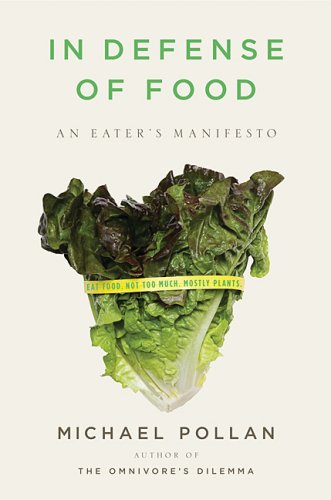
This may not surprise those of you engaged in the complex task of figuring out how best to eat while remaining a responsible global citizen. Though vegan/Hummer versus omnivore/Prius comparisons aside, I think the solution is fairly simple and well summarized on the yellow rubber band on the cover of Pollan's most recent book: "eat food, not too much of it, mostly plants" (he goes on to provide a more precise definition of "food"). Though of course this is harder to do if you're one of many Americans living in a food desert or if you're part of the growing ranks of the poor and unemployed who can't afford such a lifestyle.

In the end we compromised, using some local ingredients, having very little meat, and serving locally made hard cider in compostable cups (and I'm still craiglisting for someone who's actually willing to turn them into compost). But the real challenge came in picking a wine to use during the actual ceremony.

In one hand I held a highly rated Canadian ice wine which I knew would make for a thrilling, sweet and complicated sip while at the altar. In the other hand was a small bottle of something called Sustainable Red, a California blend that was much less exciting but which claimed to be carbon free among other eco-perks advertised on its recycled paper label.

Suddenly, on the eve of my wedding and on this threshold of my future, I felt as though I was making the choice of a lifetime. Though simple, the decision seemed epic: should I pick the bottle that contained experience or the one that held morality? Should I eat the apple or live in Eden?

In the end I went with the Sustainable Red, because that's the carboon free foot on which I want to start my new life.

But if someone bought me the ice wine, I wouldn't turn it down.

Stumble Upon Toolbar

10 Unforgettable Brazilian Dishes You Never Heard Of

See here for Brazilian blogger Regina Sharf's post on some of Brazil's more popular but lesser known culinary offerings. If you're unfamiliar with buchada de bode and pato no tucupi, you should really bone up.

The jambu, which Regina describes as "numbing... a plant that causes a weird anesthesia effect on the mouth" sounds a bit like Sichuan peppercorn. With the exception of overdoing cloves I can't think of any other ingredient known for its numbing effect. Can you?

Stumble Upon Toolbar

Thursday, November 12, 2009

If I Lived in Philidadelphia...

...I'd be going to the Festival of Forgotten foods:

http://www.philly.com/philly/restaurants/20091112_On_the_Side_.html

"It is a fine time to review the inventory in the local larder, our vintage foodscape eroding in spots, the scents of our street food overshadowed too often by the cheesesteak."

On the menu will be salt oyster and sweet corn casserole, a Thomas Jefferson recipe ale, snapper soup and catfish and waffles.

Stumble Upon Toolbar

Vegan Dog Bone


Finally, a use for those wilted Brussels sprout stalks that you never got around to braising with bacon and figs.

I'm sure I'm not the only one familiar with the paralysis resulting from not using produce at its peak. If I have supermarket romaine that starts to wilt, it doesn't stop me in the least. I rip off the slimy parts, wash, spin and essentially still have fresh lettuce.

But the higher the quality of the produce, the more intense the paralysis. For instance, if I have a backyard tomato that's starting to get fuzzy, rather than quickly throwing it into a sauce, I guilty watch it collapse into a pink puddle, frozen by guilt.

My Brussels sprouts are not only organic but also locally grown, a real double whammy for the conscience should they go to waste. It's even worse than when your parents make you finish your soggy, defrosted spinach because of the starving children in Africa. You bought those Brussels sprouts because you believe that, as Wendell Berry said, when we eat, we vote. Therefore not using those sprouts is akin to checking off the box for Nader.

Luckily, I've seen the error of my ways and also have some fresh sprouts from my winter CSA that I'll be sure to use up right away. And in the meantime, I've found that an old B.s. stalk makes an excellent dog toy. Especially for a dog who's getting cabin fever because his severed artery hasn't quite healed yet.

Stumble Upon Toolbar

Wednesday, November 11, 2009

A Serious Salad


I like salad one of two ways. Completely unadorned, eaten without utensils and out of the bag, or loaded up into a meal in and of itself. Give me anything in between, like a wilting mesclun mix with a few mealy slices of apples, and I'll punch you in the face.

The above photo does not do justice to the spectacular meal-of-a-salad that I assembled last night. That's because I took the picture halfway through the process, and by the time it was done, it looked so good that I couldn't wait another 1/60th of a second.

In its finished state, the salad contained the following:

-mixed greens from our Shared Harvest winter CSA
(spinach, chicory, red leaf lettuce, radicchio)
-cubes of baked sweet potatoes leftover from a previous meal, warmed and well salted
-crisp bits of Vermont Smoke and Cure bacon
-roasted sunflower seeds
-balsamic vinegar, whisked into the bacon grease (I'm currently roasting blue potatoes in the rest of it)

I cannot tolerate that fact that this divine creation -- at once sweet, salty, crunchy, and mushy -- shares the same name as bowls of iceberg lettuce and shredded carrots.

This is how tenth generation vintners must feel about "Two Buck Chuck," or how other, more successful gods feel when they look on our god's creations. Because, when it can be so good, it's embarrassing by what humans deign to call "salad."

Then again, if we were made in god's image, bad salads are His or Her fault.

Stumble Upon Toolbar

Thursday, November 5, 2009

The Armenian Cucumber: Cucumber or Alien?


Every now and then I like to touch base with my good friend, storyteller Jordan Hill, about how much more exciting the local food scene is in his current residence of Tucson, AZ. Of course I'm extremely proud of my own foodshed, but I guess the mesquite flour is always greener on the other side.

One day the subject turned to Armenian cucumbers. I've been delighted to find these crisp, thin skinned snacks at Boston far-mar's and was glad to hear from Jordan that they were thriving in the Southwest as well. Only it seemed there was something different about the Armenian cucumbers he was getting. While mine were the size of a small cigar, his were as big as my dog. Or, as Jordan here illustrates, his (hairy) leg:


They seem less like a vegetable and more like an oasis. Apparently the adjective "Armenian" not only means a resident of the republic of Armenia but also "either small or of Seussical proportions."

His cucumbers looked like they could eat him. However, it seems Jordan and his wife Autumn found a way to beat the cukes to it.


They butchered the monsters into delightful salads and cold soups: perfect food for living in the Sonoran dessert.

Many vegetables will grow to these proportions if left unpicked, like okra or zucchini, but at that stage their increased size usually correlates to a decrease in texture or flavor. Apparently not so with the Armenian snozzcumbers. Jordan and Autumn report that they are quite delicious.

My curiosity is certainly peaked by these watery beasts, and I'd appreciate it if someone out there could clear up the mystery as to why my Armenian cukes are small and Jordan's are so big. (Besides the obvious explanation that he's more of a man than I am.)

One thing I do know about Armenian cucumbers is that, though large, they're nowhere near as creepy as that giant rabbit. That thing gives me the willies.

Stumble Upon Toolbar

Monday, November 2, 2009

Cinnamon-Chile Wood Fired Chicken


As much as I appreciate the exotic, if lemongrass and rosemary were tied to train tracks and I could only save one, I know I'd go continental. In other words, I'm no Jean-Georges.

However, when rubbing down the above chicken before it's fight with the flames, I suddenly felt inspired to add some tropical notes to the mix. I took two Eberly's (sorry Lionette's) chicken legs and smeared them with peanut oil, salt, cayenne, chile powder, cinnamon and ginger. That and the smoke from the wood fire -- nature's pimenton -- created an eye-crossingly good grilled chicken.

As far as wood fire cooking goes, I've said it before and I'll say it again: even though you associate sitting around the fire with the nighttime (and perhaps harmonicas and plastic saguaros), it's a really good idea to start your fire earlier if you plan to cook on it and plan to see what you're cooking.

That said, I've never thought to start a cooking fire before dusk, but even so I'm starting to get a feel for it. This time I didn't scorch the chicken black and leave it sashimi grade on the inside, as I have in other dimly lit grilling experiences. And when the coals pooped out I did have to finish it in the oven for about ten minutes, but otherwise this was everything you want from chicken grilled over a real fire: crackly skin, juicy meat and just a touch of ash.

But it was really the spice mix that drove me to blog about it. I can't imagine anyone trying this recipe and being disappointed, unless they're either vegetarian or a chicken.

-----------------------------------------------------

Recipe: Cinnamon and Chile Grilled Chicken

serves 2, or 1/2 of a glutton

Note: You could use a charcoal or gas grill instead of a wood fire, but you could also go to KFC.

2 chicken legs, as sustainably raised as you can afford
a glug of peanut oil
1 tbsp salt
1 tbsp ground ginger
1 tbsp chile powder (something like ancho)
1 tbsp cinnamon
1 tsp cayenne

1. Start your fire.

2. Rub your legs with the peanut oil and spices. Do the same for the chicken legs.

3. Once the flames have given way to coals and once your grill is hot, add the legs.

4. Watch carefully. If they're giving any suggestion of catching fire, raise the grill or spread the coals to diffuse the heat. If they're not browning, lower the grill closer to the heat.

5. After about 10 minutes or when mahogany (golden is for people who peel cucumbers), flip and repeat on the B-side.

6. When both sides are brown and crackly, cut one thigh to check the interior. If they're at all pink, continue grilling with less direct heat or finish in an oven set at 350.

7. Barely hear the rosemary scream over the train's whistle.

Stumble Upon Toolbar