Showing posts with label sustainability. Show all posts

Monday, October 18, 2010

Real Eggs, For Real


A real egg has a thick shell that you actually have to crack, not just look at the wrong the way.

A real egg has a carrot-colored yolk, and it doesn't drip out of its shell: it leaps!

A real egg tastes like chicken butter.

The above photo features (real) eggs from my local far-mar scrambled with leeks, which is one of my favorite combos on earth, much more so than Combos. (Of the two, I prefer the one that doesn't sponsor a race car.)

When cracking the eggs to make this ideal breakfast, which also featured pan roasted taters and raw Napa cabbage with a sprinkling of cider vinegar, I remembered just how good a real egg can be, especially in contrast to the alleged supermarket counterparts that I've been using lately.

Don't be fooled by supermarket (or even gourmet supermarket) eggs claiming to be real eggs just because they come in cardboard and prominently display an image of a field at sunrise. A real egg comes from a chicken that has room to move about and eats real food, as opposed to sitting in a pen eating pellets that are technically organic but probably come from China. A real egg might come in a package that (gasp!) has nothing on it all.

Pseudo-real supermarket eggs may come in cardboard, they may be brown, and they may make claims like "cage-free," "organic," or "all-natural," but they just don't compare with eggs raised by your local dirty hippie socialist farmer.

A real egg has backbone. And I like to think that some of that backbone transfers to eater. But not literally, which would be gross.

Stumble Upon Toolbar

Tuesday, October 5, 2010

GMO Tater Maker Totters

The NYT reports that agribusiness giant Monsanto is taking a nose dive, with market shares dropping 42%. Yay for the local foods movement? Not exactly.

If like me you thought their market shares might be suffering from increased farmers markets and CSA shares, you're wrong. This is less about anti-frankenfood pressure and more about farmers buying cheaper, generic GMO products from (surprise) China.

Which is perhaps an even worse state of affairs. If you're going to use genetically modified seed that can spill into your neighbor's farm and cause them to be sued for intellectual property theft, and if you're going to grow crops with "terminator genes" that are programmed to produce sterile second generation crops so that you can no longer save your seed but have to go back to Monsanto for your annual fix, the least you could do is buy American.

Granted, Monsanto f's with more crops that potatoes, as the title of this post points out, but I'm willing to sacrifice accuracy for puns.

Stumble Upon Toolbar

Thursday, September 23, 2010

Poop Light

Today's Creative Use of Energy Award (something I just made up because I wanted to talk about this) goes to the City of Cambridge. Only in Cambridge does dog poop become a beacon.

Stumble Upon Toolbar

Monday, September 20, 2010

Quote of the Day

From Monbiot:

"If pigs are fed on residues and waste and cattle on straw, stovers and grass from fallows and rangelands – food for which humans don’t compete – meat becomes a very efficient means of food production."

Stumble Upon Toolbar

Friday, August 27, 2010

Vermmmont 2010: Wood Stove Oyster Mushrooms


Chole's homemade Mexican food is not the only reason I like the Craftsbury, VT farmers market. I also like it for every other reason.

The market's produce is as picturesque as its backdrop: there are the Green Mountains, and then there are the mountains of greens.

Though it looks quaint, the Craftsbury market is a radical departure from the industrial food system that appears as though it keeps trying to poison us with salmonella. Maybe it's the fact that the market is a stone's throw from Sterling College, which teaches sustainable farming almost as a way of life, or the fact that's it's just Vermont.

This year I was surprised to find one farm selling gorgeous oyster mushrooms that they cultivate on inoculated logs. I bought a half pound (for half the price that I expected) and that night Peter cooked them up with a splash of sherry and some raw milk redolent of alfalfa.

It was a cold night for the summer, reaching down into the 40's, which made sleeping on the hammocks outside a little challenging for the same reason that bridges ice before roads. But that meant we had the wood stove going, and when you've got a wood stove going, why turn on the gas stove? Peter simmered the mushrooms atop it.

Locally grown oyster mushrooms simmered in local, raw milk, a wood stove, a communal meal, human interaction, no salmonella, community: this is precisely what Stephen Budiansky pretends to forget about the local foods movement.

Stumble Upon Toolbar

Tuesday, July 20, 2010

Sumac Agua Fresca


If your soul screams for yet another post about a sour tea made from wild ingredients, read on. If you'd rather read about designer cupcakes, might I suggest another food blog.

To begin, let's play a little game of word association. I'm going to say a word, and I want you to think of the first word that immediately jumps into your mind. Ready?

Me: sumac.
You: POISON!

But have no fear. The only similarities between poison sumac and regular -- or "delicious" -- sumac are literary. Though they share a name, they look nothing alike.


And yet a hairy, red, seed-studded head of common sumac just doesn't look like something you'd want to eat. And it isn't. But it is something that you want to drink. Simply muddle a ripe head in cool water, let stand for about ten minutes, strain, and drink. The resulting liquid should be a shade of salmon that can only be described as "lovely." It is to pink lemonade as manna is to food.


Besides za'atar, this simple drink is my only experience ingesting sumac, though I could easily imagine a sumac syrup splashed into champagne, among other possibilities.


Though I have little desire to experiment given the quality of sumac tea and the ease with which it is made. Sumac tea is tart and fruity, part citrus, part berry. It is a dead ringer for a splash of pure cranberry juice in water, which is something I drink all summer but will never need to pay for again. Sumac-ade, as it is often called, is just as good if not better, not to mention carbon-neutral and obtainable without the exchange of currency. Nor does it come in a wasteful container; I carried mine home in a hat.

Brewing a cool, refreshing glass of tangy sumac jus doesn't even require a heating element, and the process could therefore predate the invention of fire. Forget about so-called organic food flown in from China: this stuff is the essence of sustainability.

----------------------------------

Sumac Agua Fresca (aka Rhus Juice)
serves 6

Ingredients:

1 quart of water
1 ripe sumac berry cluster (dark red, picked in mid-summer to fall)

To test a berry cluster for flavor, gently rub it and then lick your fingers. They'll taste tangy if you've got a winner.

Twist or snip off the berry head. Thoroughly muddle it in the water using a wooden spoon or your fingers. Pour through a fine strainer or cheesecloth removing all seeds and hairs, which can irritate the throat.

Sweeten if desired. Serve room temperature or cold. Connect with nature.

Stumble Upon Toolbar

Friday, April 16, 2010

Anna Lappé's Diet for a Hot Planet


I just finished Anna Lappé's new book, Diet for a Hot Planet. Perhaps the most interesting part comes toward the end, where the author acknowledges that much has changed about her subject during the course of her writing. Which led me to wonder: with so many many great minds and so many lightning fast new media outlets, why a book?

New data on climate change (which we should really be calling climate change for the worse) streams in constantly, as does info about the specific realm of how the way we eat heats up the planet. And I have to say, after reading countless blogs about the subject, it was a nice change of pace to sink my teeth into 336 pages sans hyperlinks.

Lappé has clearly spent more time thinking about how our forks poke holes in the ozone than bloggers such as myself who simply write about delicious meals we make and then slap a "sustainability" label onto the post as an afterthought. Lappé's quest takes her to multiple continents, to a gathering of Via Campesina and to meat industry conventions, and she combs through endless studies on precisely how much methane comes out of an organic cow vs a CAFO cow's butt.

While I'm glad for the publication of any book that looks at how our diets affect climate change, if you've read Pollan, Bittman or Kingsolver -- and you probably have -- you'll find much of Diet for a Hot Planet redundant. Then again, if you're not familiar with basic notions of how food production influences the (rising) temperature of the planet, this is an excellent resource for you. Though you'll still find some parts redundant, but then again, apparently this is an issue we need to be beat over the head with in order to fully grasp its severity. And like those who have come before, Lappé's central conclusion is this: eat less meat.

What the book does best is to debunk those studies and articles which seek to debunk those studies and articles that sought to debunk those studies and articles saying that industrially produced food is hunky-dory. In other words, industrial food came along, was championed, attacked, and then those who questioned its merits were in turn attacked.

Think of articles like Wired magazine's "Surprise! Conventional Agriculture Can be Easier on the Planet!" It's people like that article's author that Lappé now makes look stupid. She does an excellent job of revealing the biases of those critics of sustainable farming, be it funding from agribusiness giants or... well, it's pretty much always funding from agribusiness giants.

Her formula is familiar, which isn't to say that it's not effective, and most similar to the Omnivore's Dilemma: Pollan calls the ideal food producer a "good farm," she calls it a "cool farm." For an appetizer, she serves us depressing facts about the state of modern food production. For the entree, a glimpse at one of those magical, sustainable farms run by a quirky agricultural genius who just so happens to speak in one-liners, saying that the organisms in soil are "breathing, pooping, and peeing."

And for dessert, an empowering glimpse of the world that could be, topped with a list of urls for organizations dedicated to cooling the planet by popularizing cooler foods.

Stumble Upon Toolbar

Monday, April 5, 2010

Sutainable...ish

I have a confession to make, and I'm not proud of it. Here it is: though I believe it's key to our survival as a species, I admit that I don't exclusively eat sustainable food.

I'm trying -- I really am! -- to eat food that I consider to be sustainable. That means many things. For one it means not a lot of meat: not no meat, just not a lot of it, and what meat I do eat I try to buy from local farms whose practices I can trust and whose products don't require additional fossil fuels to get to me.

In the growing season, which we're thankfully re-entering, I get just about all of my produce from farmers markets or other vendors with direct relationships to area farms that don't spray their crops with poison or take more out of the soil than they put back in. For the rest of the year, I eat out of my root "cellar" (hallway) and eat the occasional frozen, dried or canned local produce. Heck, I even forage a little here and there.

But I'm going to honest with you. I still go to restaurants and I still buy bananas in winter. Granted the 'naners are organic, but they're Big Organic, which plenty of people would say is not really organic. Sure Big Organic is technically organic by the rules set forth by the USDA, but it's no more in the spirit of true organic farming than the Monkees' "psychedelic" material was in the spirit of the 60's.

So that accounts for meat and veggies, but I don't mostly eat meat and veggies. Like everyone I mostly eat starches, like bread, rice, other grains and legumes. Unfortunately, starch is the hardest thing to find in my particular foodshed. So besides the rare bag of locally milled cornmeal, the bulk of my diet is being shipped from far, far away. And that means that people far, far away are directly suffering as a result of my actions.

The fossil fuels that are being pumped into the atmosphere so that I can eat pancakes are widening the holes in the ozone over places like Australia, where skin cancer rates may be higher than anywhere else in the world. Sorry, Australians.

The fact of the matter is that I just don't have the time or resources to eat in a completely sustainable manner. None of us do, unless you're rich or live in the Bay Area. But the important thing is to own that fact and to try to do something about it. Alternatively, you could shop at Whole Foods.

With stores like Whole Foods that sell some sustainable products and lots more non-sustainable products placed next to and packaged exactly like the sustainable products, you have to be careful. In the same way that a car with good gas mileage is still terrible for the environment, food that is only sustainable-ish (i.e. grown by Big Organics) but is not wholly sustainable is still a net drain. Remember, if something isn't sustainable, it means we can't keep doing it.

Is shopping at Whole Foods better than shopping at a "normal" grocery store? Depends. A pound of lentils at Stop n' Shop is probably better for everyone than a pound of New Zealand lamb from Whole Foods. Does Whole Foods do some things, like carrying local produce, right? Yes. But does shopping at Whole Foods lull you into a sense of complacency induced by their bounteous displays of produce and soothing, rounded, fonts? No doubt.

To be optimistic, let's think of Whole Foods as step on our path but by no means the destination. What we really need are more sustainable farms growing more kinds of food, more sustainable processors turning that corn into cornmeal, and more people turning it into sustainable hush puppies.

We are an extremely creative and capable species. Just look at how good we are at producing the cheapest goods possible without regard to the well being of the work force or health of the planet. I have no doubt that we can shift our priorities and solve the intertwined global food crisis and climate crisis.

May we then have a sustainable chicken in every sustainable pot and a bicycle in every garage, and vegetables growing on the roof of that garage.

Stumble Upon Toolbar

Friday, March 26, 2010

Agriculture 2.0

See this piece from Grist about the intersection of sustainable agriculture and venture capitalists, which I think is a good thing? (Notice the question mark.)

It was inevitable that big investors would realize that sustainable food is, for some, a hot commodity that can be packaged and sold as easily as an ipod. Will the products they invest in be compromised by their interaction with it? Probably.

Do we want people who don't walk the walk able to influence sustainable food producers to cut costs and thereby become less sustainable? No. But what really interests me about this union is the potential to get the message out and to tap into the undeniable creativity of companies who have already mastered the art of taking down the establishment.

From the Grist article:

"Think of the companies that have remade commerce -- and made many billions of dollars -- over the past 15 years: Amazon, eBay, Google. They all exploited networks and data mining to upend conventional competitors."

Stumble Upon Toolbar

Tuesday, March 9, 2010

Short Ribs Come Up Short


Meat has never been more popular and unpopular than at this point in time. Its aficionados are more rabid than ever -- from fat crazed foodies to members of developing nations who are upping their intake -- and the same fervor is found in those who abstain. Depending on who you talk to, eating meat is either the pinnacle of human existence or the rope we're hanging ourselves (and the rest of the planet) with.

I fall somewhere in between. I love eating meat, and I recognize how bad it can be in the amounts we eat it and in the way we produce it. When I do partake of the flesh, I mostly eat sustainably raised meat from nearby farms like Codman and Stillman and Verrill and rarely let it take center stage on the plate. That keeps me below the national average of a half a pound a day, which if you're going to eat meat is really the least you could do.

Of the popular cuts of meat with those for whom meat is popular, short ribs are currently tops. They meet all of the criteria for hip meat: they're fatty, popular in Asian cuisines, and most importantly not something most of us grew up eating. (And by "hip meat" I mean meat that people are into, not meat from the hip.)

I've been perfectly happy eating short ribs in the past, though I've never thought they were any better than any other fatty cut that's been braised forever in something delicious. But when I finally made my own short ribs (by which I mean short ribs that I cooked and not part of my body), I was a little let down.


Largely it was my fault. I went with a generic dark, Chinese-ish sweet soy braise, and I went overboard with cleaning out my cabinets to flavor it. Components included leftover coffee, Sichuan peppercorns, a star of star anise, cider, palm sugar, soy sauce, a cinnamon stick, carrots, onions, garlic, cumin, I think, as well as the belief that I had the power to haphazardly create the perfect braising liquid. That last ingredient was probably the one most responsible for the slightly bitter aftertaste.

Also, there was just too much fat. I'm not celluphobic, but I also will only eat so much beef fat in one sitting (by which I mean not a lot of beef fat rather than SO much [emphasis mine ((everything else mine too))]), and there just wasn't a ton of meat left after I'd separated it. But note the juice being absorbed by the board.


And just to make sure that the meat wasn't the main event, it was served with broccoli and some of the reduced liquid over quinoa-corn noodles.

Now I know what you vegetarians and vegans are thinking: why not just eat the noodles and broccoli? Well that wouldn't have made a very interesting blog post now would it?

Stumble Upon Toolbar

Thursday, March 4, 2010

Redbones Beef

Last night I spent ten bucks at Redbones and had as good of a gastronomic experience as can be had for that amount of money anywhere in the "first" world. More on that in a moment.

Dave and I split a pulled pork sandwich which we slathered with as much of their hotter bbq sauce as they would bring us, a mug of pot likker, hush puppies, and unfried hush puppies, also known as cornbread. To wash it down we ordered pints of the current cask-conditioned ale offering, which happened to be a porter from Opa-Opa (I think it was called Vanilla Oak, though thankfully it tasted like neither).

In that litany there was nothing not to like. The pork was smokey and juicy. The pot likker murky and faintly sweet (turnips?). The cornbread was thankfully devoid of sugar. My only complaint is that the hush-puppies weren't as crackly and fresh out of the oil as you want them to be.

The beer was just perfect, and perfect with that food. As I brought the glass to my mouth all of my senses told me that there was something very different about it, which is of course exactly what I want from something cask-conditioned: the head was more dense, the carbonation more silky, and I was more buzzed (either because of a higher alcohol content or because it was the first alcohol I've had since getting sick last week, or maybe just because I'm a nancy.)

The only thing I didn't like about Redbones is the same gripe I have with most restaurants in general. The menu in no way acknowledges the progress that has been made in understanding our bittersweet relationship to industrially produced food.

The latest estimate puts food-related illness costs at $152 billion, and I guarantee that most if not all of those costs come from the same industrial agricultural processes that we think are so cheap; that made my meal last night so intoxicatingly affordable.

So would it kill restaurants like Redbones to throw out even one sustainable option for those of us who want to have our meat and eat it too? River Rock ribs, perhaps?

All the nancies like me would gobble it up.

Stumble Upon Toolbar

Thursday, February 4, 2010

Is Kosher Greener?

Thanks to Jay for sending me this article from Slate. It's an interesting read for anyone like me who has wondered if the ancient foods laws of kashrut and halal match up with the newer school (though many would argue that it's not new at all) of food purity: sustainability.

So is kosher meat better for the environment than the non-kosher alternative at the supermarket? According to this article, no.

Essentially a kosher animal is one that is raised exactly the same as a non-kosher animal (in a feedlot, on antibiotics, without massages) until the moment it is killed. While a kosher animal may be killed more humanely (an overlap with sustainability), by that point the environmental damage has already been done. Kosher meat may technically fit the criteria followed by observant Jews, but it does little more for the animal, the planet, or the eater. If you want to eat kosher and eat green, you need to look for eco-kosher certification.

As I've said before, if I have the choice between a sustainably raised pig and kosher, supermarket chicken, I take Michael Pollan's advice before the lord's. Kudos to those who are making it easier to do both.

What's really interesting to me is that if you were to raise animals the way Jews did in the ancient days, by default you would end up with eco-kosher. So really the enemy is modernity.

Stumble Upon Toolbar

Wednesday, January 13, 2010

Additional Thoughts

First, back to the subject of micronutrients. In thinking more about Kristof's piece in the Times, I realize that the foods he lists which contain micronutrients ("salt, sugar, flour or cooking oil") are all processed.

But surely micronutrients occur naturally, otherwise the human race would never had made it to modernity. I'm sure that infusing flour with folic acid is the shortest and most immediate step to upping the micronutrient intake for nutrionally deprived populations, but then what?

Here in the U.S. we're suffering the long term effects of what is now referred to (negatively) as the Western Diet: diabetes from sugar, hypertension from salt, and every bad thing you can imagine being linked to white flour. I know that any food is better than no food and that processed foods are the quickest fix to famine, but the last thing we want to do is to forever hook other populations on the stuff that is now doing us in.

My guess is that micronutrients naturally occur in the foods that everyone ate prior to industrialization, and in a perfect world we would enable populations to get back to eating their traditional diets, which nearly always consist of more real food such as fruits and veggies, rather than mixing vitamins in with their sugar.

Now to return to yesterday's post and my vision for a more sustainable winter food supply for New England. I left off a key component of eating locally grown produce in winter: extending the season. Greenhouses, hoophouses, cold frames and so forth. There are farms that harvest spinach in the winter in Maine. The technology is cheap, the environmental impact is far lesser, and the source is more reliable. What are we wating for?

Stumble Upon Toolbar

Tuesday, January 12, 2010

Florida, Frost, Food and Pythons


The above photo was not taken in my home state of Florida, but it nearly could have been (it was snapped on Sunday during a snowshoe through the Sudbury Desert). As you've probably heard, temperatures in FL have plummeted to record lows, wreaking havoc on a state better known for being too hot all of the time.

Here in New England we're used to such temperatures, but we're also used to getting a lot of our food from Florida. This fact was driven home for me yesterday I swung by my neighborhood natural foods market. The produce shelves were nearly bare save for a note explaining that below freezing temperatures throughout the South were to blame.

Oh, right! I forgot that bananas, tomatoes and all of the other tropical flora we're used to devouring day in day out actually come from very far away, and that many have pointed out the tenuous nature of depending on such distant places for our food supply.

It's been said that, when it comes to food, the country can survive without the city but the city can't survive without the country, and now it seems that cold places can't survive without the (supposed to be) warm places. Of course the delicious irony is that the less sustainable our food supply, the more chaotic the weather is going to get and the more we'll see the system flounder. In other words, the more we ship produce from far away, the more carbon we pump into the atmosphere, the weirder the weather gets, and the more wrenches will get thrown into the plan.

What does a more sustainable New England food supply look like in winter? On a grassroots level, it means home cooks doing more freezing, canning, drying and storing locally grown produce that keeps well. For instance, the $200 worth of root veggies and apples my wife and I have chilling in our hallway. But what does it mean for people who aren't hippy hobbits?

On a larger scale, we need more local processing of local ingredients. That way those of us who don't have time to cook and jar applesauce (though in my utopia that's something we all make time for) can go buy locally grown, frozen, dried and stored stuff at your neighborhood market. As Grist reports, to truly go local, we need not more independently owned groceries.

The one good thing about a freezing Florida is that it may help inhibit the horrifying Burmese python problem. When they get cold, these exotic invasive monsters come out to bask in the sun, and the Florida Fish and Wildlife Conservation Coalition is reminding hunters that it's a good time to find one and blow it away. And that opens up a whole new food supply.

Stumble Upon Toolbar

Wednesday, January 6, 2010

Circle of Life (and Compost)


Shortly before New Year's my compost bin reached capacity. Since I've never lived in any one place long enough to fill an entire Earth Machine, I wasn't exactly sure what to do.

My short term solution was this: empty the bin and cover the compost with a tarp until Spring. Would that be enough to keep out the foxes, raccoons and teenagers who hang out in the woods behind our house? Only time will tell.

Most of the compost was frozen solid, but the oldest stuff had stayed loose due to heat released by what Wikipedia so poetically calls "the microbial oxidation of carbon." As far as I'm concerned it was that or magic, since I have no way of proving either. But as a result I was left with the doughnut shaped ring of frozen compost pictured at top. What better embodiment of the notion of "closing the loop?"

A doughnut made out of decaying vegetable scraps and eggshells might not appeal to some, but I was intrigued. Here was a chance, on the eve of a new decade, to come face to face with the Ghost of Food Scraps Past. In an era when most of our garbage is whisked out of sight before we think twice about how much of it we produce or where on earth it goes, here was an opportunity to take a closer look at my personal consumption.

What I learned is that I eat a lot of eggs (the shells take a while to break down) and that things that say they're compostable, like potato starch forks or corn plastic bags, certainly don't seem to be.

In looking through the strata, I was able to recall some specific meals. There was a layer of corn cobs from a corn stock I made last winter, and the skin of a pumpkin that I'd peeled for a curry. When I had dug out the center but not yet lifted off the ring, the pile looked very much like a puehr cake.


And now that I think about it, there's plenty of puehr in there.

Absent from the compost pile was all of the junk that we couldn't turn back into dirt (besides the wine bottles I'm saving for another garden barrier, the egg cartons I keep forgetting to return to the farmer, and the bones that I bury in the woods). For instance, there were none of those eerily bandage-like spongy things that come under packaged meat.

Luckily, most waste can be composted or recycled and we don't produce very much trash. Or at least that's what I think. If there were a special cubby just for me at the garbage dump, and at the end of the year I could see all of the useless junk I sponsored, I'd probably be surprised.

But at least some of my waste will end up back in the garden, assuming those teenagers don't get to it first.

Stumble Upon Toolbar

Tuesday, November 17, 2009

The Choice of a Lifetime

In all likelihood, this will be my last ever blog post as an unwed man. This Saturday, I'm getting married.

I was well prepared for the intensity of planning the wedding thanks to advice from friends and family and thanks to the movie Father of the Bride. What I wasn't ready for was the nearly talmudic decision making process of how to make the event (and the menu) as sustainable as possible (or as sustainable as we could afford).

Compostable cups or reusable glasses? Local apples that have been sprayed or organic ones with transportation induced carbon footprints? Classy, printed invites or a pdf sent over e-mail? Such decisions were seemingly endless.

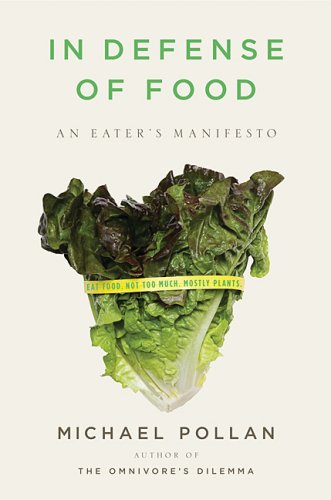
This may not surprise those of you engaged in the complex task of figuring out how best to eat while remaining a responsible global citizen. Though vegan/Hummer versus omnivore/Prius comparisons aside, I think the solution is fairly simple and well summarized on the yellow rubber band on the cover of Pollan's most recent book: "eat food, not too much of it, mostly plants" (he goes on to provide a more precise definition of "food"). Though of course this is harder to do if you're one of many Americans living in a food desert or if you're part of the growing ranks of the poor and unemployed who can't afford such a lifestyle.

In the end we compromised, using some local ingredients, having very little meat, and serving locally made hard cider in compostable cups (and I'm still craiglisting for someone who's actually willing to turn them into compost). But the real challenge came in picking a wine to use during the actual ceremony.

In one hand I held a highly rated Canadian ice wine which I knew would make for a thrilling, sweet and complicated sip while at the altar. In the other hand was a small bottle of something called Sustainable Red, a California blend that was much less exciting but which claimed to be carbon free among other eco-perks advertised on its recycled paper label.

Suddenly, on the eve of my wedding and on this threshold of my future, I felt as though I was making the choice of a lifetime. Though simple, the decision seemed epic: should I pick the bottle that contained experience or the one that held morality? Should I eat the apple or live in Eden?

In the end I went with the Sustainable Red, because that's the carboon free foot on which I want to start my new life.

But if someone bought me the ice wine, I wouldn't turn it down.

Stumble Upon Toolbar

Wednesday, September 30, 2009

Mr. Vongerichten Goes to Boston

See today's Globe for my article on the Boston opening of Chef Jean-Georges Vongerichten's 25th restaurant.

His farm-to-table concept, called Market, already exists in three other cities around the world. Which is why I thought it was so funny to write the following line:

"The Boston Market, not to confused with Boston Market..."

My editor disagreed. See the whole thing here:

http://www.boston.com/ae/food/restaurants/articles/2009/09/30/vongerichtens_latest_venture_has_international_flair_regional_flavor/?page=1

Stumble Upon Toolbar

Thursday, September 10, 2009

News Flash: Filet-o-Fish Not Sustainable

I can't say that I'm shocked that the tasteless fish served in anonymous, fried patties by McDonald's, Denny's, and Long John Silvers is not being harvested sustainably:

http://www.nytimes.com/2009/09/10/science/10fish.html?_r=1&no_interstitial

Stumble Upon Toolbar

Wednesday, August 26, 2009

The Lemon Cucumber


Like many of you out there, I grew up after the Industrial Revolution but before the Delicious Revolution. In that awkward phase of human history, which I hope is drawing to a close, there was only one kind of cucumber: The Cucumber.

I grew up in a healthy household, for the time. That meant no soda, but it also meant industrially produced produce. Even though I lived in Florida, where one could potentially eat from the garden every day of the year, we only had access to the same stuff that everyone else in the country was eating. And everyone was eating The Cucumber, which, like the County Paris, is as bland as it is handsome.

Flash forward to a world in the midst of a food revolution, sometimes delicious, sometimes not. The revolution takes many forms, from riots over rising food costs in Haiti to those locally made logs of goat cheese at your neighborhood farmers market. Though the stakes vary, these are opposite sides of the same coin. Both say, in very different ways, that the system we've been relying on is broken, and that it's time to look elsewhere.

We now live in an era in which there are many, many kinds of cucumbers. Or rather we live there/then again. Before The Cucumber was singled out for its ability to survive long truck rides and still arrive looking like a cartoon, there were many cucumbers bred for many different climates and culinary purposes.

For instance, the lemon cucumber, which is not named for its flavor but for its appearance. And though it doesn't taste like a lemon, it does taste about a bajillion times better than The Cucumber. I'm thrilled to see that heirlooms such as these are regaining popularity, and I plan to eat them all.

But wait, you say. Isn't the lemon cucumber just for limp wristed East Coast liberal elitist foodies, bloggers and food bloggers? Isn't the whole Delicious Revolution a bit "unrealistic" as Anthony Bourdain says?

No. While I now have lemon cucumbers like the one pictured at top growing in my garden, I had my first at an immigrant-run farmers market booth in the parking lot of a shopping mall in Springfield, Missouri. Now that's crop diversity.

Stumble Upon Toolbar

Monday, August 24, 2009

White Mountains, Blue Berries


One way to beat the summer heat in New England is to rise above it. Yesterday I left the steamy, swampy lowlands of Boston for a chilly, misty mountaintop in New Hampshire. Cardigan, to be exact.

As if the dramatic weather wasn't enough of a reward, the summit was also rife with wild blueberries.


And mountain cranberries.


Now maybe you're not supposed to pick the berries in a National Park, but it's better for everyone if you eat the fruit growing at your feet rather than stuff trucked in from Mexico.

Just leave some for the bears, and for me.

Stumble Upon Toolbar